Sunday, March 8, 2026
3:00 PM
New England Congregational Church
406 W. Galena Blvd., Aurora, IL
3:00 PM
New England Congregational Church
406 W. Galena Blvd., Aurora, IL
7:30 PM
PianoForte Studios
1335 South Michigan Ave., Chicago, IL
7:30 PM
Music Institute of Chicago, Nichols Concert Hall
1490 Chicago Ave., Evanston, IL
Join us for our Spring Benefit following the March 8th concert.
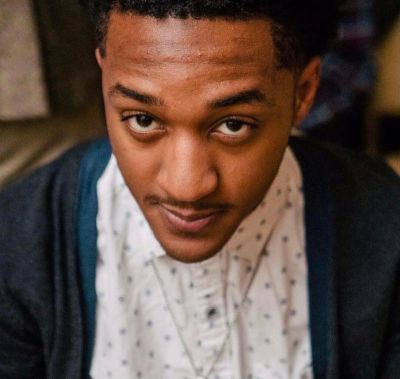
Chicago-based composer and musician Ephraim Champion's music spans stage and screen, with highlights including Scenes from South Shore, Chicago (premiered by Gaudete Brass at the 2021 Ear Taxi Music Festival) and Humanhood (premiered by Constellation Men's Ensemble, 2022). As the 2023 Hearing in Color/La Caccina Young Composer-in-Residence, he composed All Things Sublime and Colossal for the virtuosic women's vocal ensemble La Caccina and A Stone of Hope (Martin's Song) for the Music Institute of Chicago, featuring multi-Grammy-nominated pianist Marta Aznavoorian. Also in 2023, he became the resident film composer for Slightly American Productions, scoring two short films: Girls in the Back of the Club and Rejection is God's Protection.
Champion's Suite for the F Horn & Tenor Saxophone premiered at the 2023 World Saxophone Congress (Spain), followed by The Spectacle (commissioned by The Yamaha Tuba Duo) in Fukuoka, Japan (2024). His piece Vicariously Through You appeared on the 2025 Project Encore, Vol. 2 album, commissioned by critically acclaimed and Grammy-winning classical saxophonist Timothy McAllister. In April 2025, the Chicago Composers Orchestra premiered Champion's first symphonic sketch, Sonder & Ozurie.
An accomplished horn player, Champion appears on Leo Sowerby's Synconata, H. 176a with the Andy Baker Orchestra in an album released by Cedille Records entitled Leo Sowerby: The Paul White Commissions & Other Early Works and on composer Marcus Norris' film score for the feature film Honk for Jesus. Save Your Soul starring Michael K. Sterling and Regina Hall. He also plays keyboard/synth for Chicago hip-hop artist (and brother) Doso in his band Doso LIVE.
Champion shared his thoughts and ideas in an extensive interview below.
What first inspired you to compose?
Composing has always been a part of me. When I was little, I would hum melodies while my sister and I played with toys. I didn't realize it, but I was already scoring my own narratives.
For a long time, I thought I was destined to be a performer. I come from a musical family and was ambitious, starting cornet at age 6 and switching to French horn at 9. Fast forward, and I was pursuing a double major in horn and piano performance at UIC with dreams of being a principal orchestral player and concert pianist.
But the shift happened gradually. I reached a point where I would rather improvise my own pieces on the piano than prepare Bach or Chopin for my next lesson. So I made the difficult decision to stop the piano degree midway through undergrad. I continued with the horn, eventually earning a master's in orchestral studies from Roosevelt University, but my performance dreams were fading, accelerated by some embouchure issues. Composing became my solace.
Since UIC didn't have a composition degree, I rigged one together, taking every available class and doing independent studies with my mentor, Marc Mellits. He validated my knack for composing after I presented a few pieces I had written. By the end of undergrad, I received my first commission for the Gaudete Brass Quintet, Scenes from South Shore, Chicago, which Chicago Classical Review called the "most impressive piece on the program."
In addition to toys, my inspiration started with my love for storytelling, which is how I approach my music, inspired by fiction series like Percy Jackson, Harry Potter and A Series of Unfortunate Events. It started with a growing love for cinema and its music, specifically John Williams' score for Harry Potter and Harry Gregson-Williams' score for Narnia. But it truly washed over me later, sitting through the end credits of Gladiator, listening as Hans Zimmer's score and Lisa Gerrard's captivating voice over the track Now We Are Free. I whispered to myself then, on the brink of tears, but resolute: "I want to do this forever."
Looking back, my performance background wasn't a distraction; it was the necessary path to get here. The only "mistake" is not learning from experience. I wouldn't trade those years for the world. You often have to go through Things #1-4 before you get to Thing #5, the thing you were meant to do. Funny thing is I came full circle. My "Thing #5" is where I started in the first place. I've returned to my primal calling, and I couldn't be more fulfilled.
Do you find composing for live performance has similar, or different, challenges than composing for the screen?
Great question! I initially wanted to be a film composer before ever considering concert music, but I've come to deeply love both. While the core skill, writing music, is the same, the execution involves entirely different muscle groups.
The first major difference is the toolkit. When I write for the stage, the process is streamlined: I need a computer and notation software (I use Sibelius). It doesn't matter if the playback sounds robotic because I know real, breathing musicians are going to bring it to life. Film composing, however, is a massive technical learning curve. I'm not just the composer; I'm the producer, the mixer and the orchestra. In film, I work in a Digital Audio Workstation (DAW) like Logic Pro X. Because productions rarely have the budget for a live orchestra, I have to use technology to mock up every instrument. I'm constantly tweaking faders to make a MIDI violin sound like a real player. It has to sound "radio-ready" before it leaves my studio.
Then there is the paradox of time. In the concert world, I might have six months to write a 10-minute piece. In film, I might have three weeks to write 60 minutes of music. Because the turnaround is so tight, film composing becomes less about solitude and more about management. If you are fortunate enough to have a budget, you learn to delegate, hiring orchestrators, music editors and mixers, so you can focus on the creative "big picture." You learn quickly that communication is just as important as composition; you are leading a team while navigating a complex web of directors, producers and sound designers. But usually you don't have a big budget, and you're doing much more than just the purely creative work. In either case, big budget or not, communication skills and navigating relationships are crucial, as there's a lot of politics involved in the film world (i.e., producer vs. director).
Career-wise, the trajectory feels different, too. In the concert world, growth feels somewhat linear: one commission usually leads directly to the next via word-of-mouth. In film, the loop is much slower. Movies take years to make. You might do a great job for a director, but they won't need you again for another five years until their next project is in post-production. It requires a different kind of patience and networking resilience.
But creatively, the biggest shift is autonomy. When I'm commissioned by an ensemble, they are asking for my voice. But film scoring is client work. My music exists to serve the director's vision. You might write the perfect cue, but then the editor cuts the scene by 15 seconds. Now you have to solve a musical puzzle: How do I hit the same emotional beats in less time?
Despite these differences, the goals remain the same. Whether for stage or screen, I want to tell a story. With film, my goal is to make the score inseparable from the picture, like hearing the Star Wars theme and instantly seeing the opening crawl. At the end of the day, despite the different software, deadlines and politics, it's all writing music. I rely on the storytelling instincts I honed in the concert hall to help me navigate the fast-paced world of film.
How did you first connect with Orion?
This is actually quite a full-circle moment for me! Pianist Diana Schmück was my piano teacher during my high school years. She is directly responsible for the most significant growth I ever had on the instrument and helped prep me for my college auditions. I'm forever grateful to have met and learned from such an incredible musician and teacher!
I've been a fan of Orion for a long time. I remember my lessons ending just as the group was arriving to rehearse. I even turned pages for Diana during an Orion concert once, my first page-turning experience ever! I was terrified I'd mess up and cause the piece to fall apart. I have never thought so much about turning a piece of paper in my life.
To come back after all these years in a different capacity is special. I'm no longer the nervous student page-turner; I'm a collaborator. But the nerves are still there, just in a different way! Instead of worrying about not being prepared for a lesson, I worry about other things, like what everyone will think: Is the piece idiomatic? Will Orion connect with it? Will the audience like it?
Composing for me is like trying to keep three lines in parallel: how I feel, how the musicians feel and how the audience feels. I've found that if I focus too much on the latter two, I never satisfy the first, and the music suffers. Audiences are smart; they can tell when your heart isn't in the work. So, while the fact that I'm writing for my former piano teacher is admittedly kinda terrifying (lol!), I wanted to give this piece my all, not just because I want it to be good, but because it's Orion! This particular commission is a special one.
You compose frequently, but not exclusively, for brass instruments, and you play as well. What excites you about composing for a chamber music ensemble?
Actually, I feel I don't get to write for brass nearly enough! Despite being a horn player, most of my work recently has been for voice, even some of my film scores. In a creative career, you follow where the opportunities lead (until you can afford to be more selective haha), and lately, that has been music that incorporates vocals in some way. So, writing for this instrumentation was a welcome return to purely instrumental chamber music. I also love how this group is almost like a traditional piano quartet except we have clarinet rather than viola. I love it because that's an additional color to play with, and I love playing with the different colors/timbres of the instruments.
I am drawn to Orion's sheer mastery. I recall violinist Florentina Râmniceanu's elegant poise and powerful playing. Cellist Judy Stone gets such a rich sound from the instrument. Clarinetist Kathryne Pirtle made me realize how versatile the clarinet is. She has such a warm, musical sound. (Fun fact: I actually went to undergrad with her daughter, Morgan, who is an amazing vocalist!). And of course, Diana Schmück is a force. I've dedicated this piece to her, and writing for her is a true honor.
My appreciation for chamber music goes back to that concert where I turned pages for Diana. Sitting behind the musicians, I was in the moment but removed from it. I remember the light hitting the ensemble and the sheer emotional beauty of the performance. I was so captivated I probably almost forgot to turn the page! That memory actually loosely inspired the second movement of this new piece. I wanted to write something that captured that same feeling: slow, beautiful and captivating. I know they are going to make it sound incredible.
Can you share any details about the work you're creating for Orion?
The piece is called thinkpiece. In the writing world, a think piece is "an article presenting personal opinions, analysis or discussion, rather than bare facts." That is exactly what this music is. It is one of the few times I've allowed myself to write without an agenda, concept or story. It isn't about the state of the world, how I'm feeling in the moment or a specific character's journey. It is music for music's sake, an "opinionated" piece based on nothing other than my artistic voice or expressions of my heart. Because of this, the piece is largely through-composed. I wasn't trying to be super-clever, academic or experimental just to prove a point. However, getting there was a significant challenge.
I have a philosophy about creativity: I believe ideas come to me, not from me. They are gifts, from the Muse, the Universe, God or whatever you want to call it. But we are responsible for them. I think you have to meet creativity halfway: capturing, nurturing and nourishing ideas. You have to do the grunt work to signal to your subconscious that the task is important. In a way, creativity is forced. If creativity just "happens," then Mahler wouldn't say "he's hitting his head against the walls, but the walls are giving away." So, you have to send that signal to the mind that this is important. That is what triggers those "Aha!" moments in the shower, while washing dishes, walking the dog or meditating.
For this piece, the ideas were shy. I scrapped my first draft entirely. Hated it (good thing I didn't get far). But once I broke through the resistance, it became chaotic, I was flooded with about five distinct, seemingly unrelated ideas. My approach is usually to combine rather than separate. I believe if I am focusing on one piece, and these ideas arrive, they must belong to it, no matter how different they seem. Sometimes that may be in the form of separate movements, but not separate pieces. My job was to trust that connection and weave these "random" gifts into a cohesive narrative.
The result is a work in two movements. The untitled first movement is the "text," the main body of the work. The second movement is titled addendum. In writing, an addendum adds information to an existing document without altering the original text, which fit my intent perfectly.
Addendum is actually a reimagining/quote of the very first piece I ever wrote down, a trio for piano, cello and clarinet called Each With a Different Story, which I wrote during a high school composition program at Roosevelt University, in the very same room where I would give my master's horn recital years later, as it turned out. There was a brief, 30-second moment of calm in that high school piece that I always loved. For Orion, I wanted to return to that moment, add a violin part and expand that fleeting feeling of stillness into a full, four-minute emotional conclusion.
So, in a way, this piece really is a "thinkpiece," a collection of my current musical opinions, with a P.S. from my younger self attached at the end.