Sunday, March 16, 2025
3:00 PM
New England Congregational Church
406 W. Galena Blvd., Aurora, IL
3:00 PM
New England Congregational Church
406 W. Galena Blvd., Aurora, IL
7:30 PM
PianoForte Studios
1335 South Michigan Ave., Chicago, IL
7:30 PM
Music Institute of Chicago Nichols Hall
1490 Chicago Ave., Evanston, IL
Join us for our Spring Benefit following the 3:00 PM March 16 concert.
"Trio on the Roof" for Violin, Clarinet and Piano
Alexander Goldstein (b. 1948)
Russian-American composer Alexander Goldstein's Chicago premiere is based on music by Jerry Bock from the Broadway show Fiddler on the Roof. A prolific composer, Goldstein has written for screen, stage and concert hall, and a number of works for the stage have inspired his chamber music compositions. In each of this work's four movements, he highlights musical material from one of Fiddler's songs - "A Fiddler on the Roof," "Sunrise, Sunset," "Do You Love Me?" and "If I Were a Rich Man," along with hints of "To Life" - to provide four charming, substantive chamber music pieces.
Trio in B-flat Major, K. 502 for Violin, Cello and Piano
Wolfgang Amadeus Mozart (1756-91)
In this work, Mozart breathes life into what was a relatively new form of chamber music, the piano trio. Although Haydn, Mozart and others previously wrote works for these three instruments, those earlier efforts were primarily piano sonatas with an optional obligato violin part and a cello part supporting the piano bass line. But in the five trios he wrote from 1786 to 1788, Mozart gave birth to a piano trio in which the three instruments were more independent and essential to the work, a trend that continued to develop for centuries. This trio has two brilliant outer movements that surround an elaborate larghetto middle movement.
Trio in B Major, Op. 8 for Violin, Cello and Piano
Johannes Brahms (1833-97)
First written in 1853, this trio took a lifetime to complete. Brahms reworked it substantially in 1887-88. While claiming his intent was "not to stick a wig on it but merely to comb its hair a little," he did effect major changes, mainly by writing new material for the second theme of every movement except the scherzo and shortening the first movement, removing its fugue. The result was a mature masterwork that was still full of youthful energy. The first movement highlights the broad melodies for which Brahms is known; the scherzo combines delicacy and power; the sublime adagio, with its ethereal piano chords, string duets and chromatic cello melody, is one of Brahms' most notable; and the boisterous finale brings back hints of the opening movement before ending, surprisingly, in a minor key.
ORION STORIES
Broadway Inspires Chicago Premiere on Orion's "To Life!" Concert Program
Orion's concert program "To Life!" includes the Chicago premiere of Alexander Goldstein's Trio on the Roof for Violin, Clarinet and Piano (2013), based on music by Jerry Bock from the Broadway show Fiddler on the Roof. In each of this work's four movements, he highlights musical material from one of Fiddler's songs - "A Fiddler on the Roof," "Sunrise, Sunset," "Do You Love Me?" and "If I Were a Rich Man," along with hints of "To Life" - to provide four charming, substantive chamber music pieces.
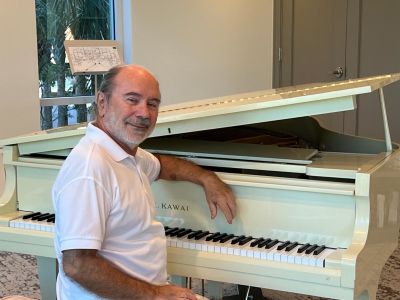
Goldstein is an American-Russian composer, conductor, songwriter, record producer and more. He has scored 27 feature films, including two world-renowned silent classics, about 300 documentary films and animations, radio and television shows, circus performances, stage shows and commercials. He also creates competition music for sports events worldwide, including for more than 40 Olympic medalists.
Goldstein composes symphonic, chamber and solo compositions for various instruments that are performed worldwide. Among them are Neapolitan Symphony; Symphonic Poem To Be or Not To Be; Rotissimo, a Suite for Clarinet, Violin, and String Orchestra; Rhapsody on the Theme of Albinoni for Violin, Cello, Harpsichord and String Orchestra; The Beauty of Ostinato for String Orchestra, Piano and Bass Guitar; Introspective Trio, a Multimedia Project for Violin, Cello and Piano, with prerecorded audio and synchronized video; and Forward to the Past for Organ, Violin and Viola. His most recent composition, On the Wings of Classics, Concerto for Violin, String Orchestra and Piano, premiered in December 2024.
Goldstein shares thoughts about his work and Orion below.
What led you to composing for the stage and films? How are the challenges similar to or different from composing for chamber concert performances?
I came to composing after having a full classical music education, attaining a master's degree in French horn and conducting from The Gnessin School of Music in Moscow. For many years I composed mainly for film and theater. When at last I took up composing for the stage, the goals I set out to achieve in my work were different.
Music for films confined me to the film story, premise and timing. Often, the budget was restrictive. Also, the director is king. Yet, a film composer must have virtuosity to compose in any genre the film may require.
None of that is similar to working with the concert performances, except I uphold the high standard of composition technique. There are no limitations. I am face-to-face with my own ideas, style and individuality.
Why were you drawn to melodies from Fiddler on the Roof for this composition?
My driving idea was that the fantastic music that was written for the musical is so interesting, so I wanted to transform it for a classical stage, where music lives by laws very different from the Broadway stage or film. I chose the four melodies that resonated very deeply with me, and I rethought them in different styles, instrumentation and rhythms to breathe new life into them.
Do you think it's important that the audience be familiar with the show or movie or are there other ways to enjoy this music?
The impact of my music is different if the audience has had previous exposure to the music of Jerry Bock. My goal, however, was to write a fresh composition that does not lean on support of previous exposure. But those who know those melodies may have a more enriching experience when they recognize familiar phrases and follow them in their new attire.
What has it been like to work with Orion for the first time? What are you looking forward to when Orion premieres this piece for Chicago audiences?
I have heard excellent reflections from respected sources, and I am looking forward to hearing my compositions performed live by such a great group of musicians.
Anything else you'd like to share?
I hope that Chicago audiences will enjoy this Trio as well as other audiences who attend performances of it in many countries.